





 Meteorological elements(II)
1. Clouds
Clouds are a collection of tiny droplets of water or ice crystals that settle on dust particles in the atmosphere. The droplets are so small - a diameter of about a hundredth of a millimetre - that each cubic metre of air will contain 100 million droplets.
Clouds will either be composed of ice or water droplets depending on the height of the cloud and the temperature of the atmosphere. Because the droplets are so small, they can remain in liquid form in temperatures as low as -30 °C. Extremely high clouds at temperatures below -30 °C are composed of ice crystals.
1.1 Introduction to Clouds
We see clouds almost daily. They can grow very tall or appear flat as a pancake. They are typically white in color but also appear in different shades of grey or in brilliant yellow, orange or red. They can weigh tens of millions of tons yet float in the atmosphere.
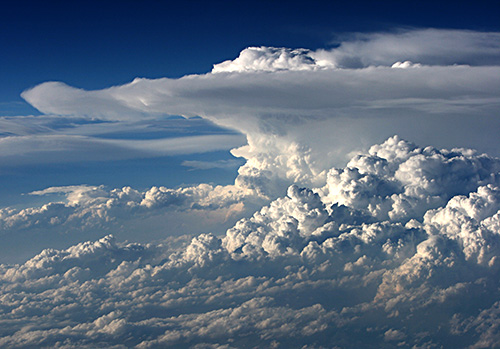
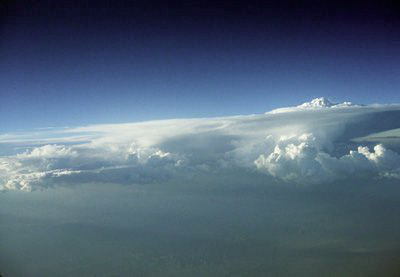
Cumulonimbus cloud seen from 38,000 feet.
Clouds can be harbingers of good weather or bad. Their absence can be a good thing after a flooding rain or a bad thing during a drought.
They provide relief from the heat of direct sunlight but also act as a blanket to warm the earth.
Clouds help water the earth by providing precipitation but can hinder driving by reducing visibility.
They come in infinite shapes and sizes yet we often recognize more familiar objects or animals.
Clouds can be carried along by winds of up to 150 mph (240 km/h) or can remain stationary while the wind passes through them.
They can form behind high flying aircraft or can dissipate as a plane flies through them. They are not confined to earth but are found on other planets as well.
What are clouds? They are "the visible aggregate of minute particles of water and/or ice". They form when water vapor condenses.
1.2 How Clouds Form
There are two ingredients needed for clouds to become visible; water, of course, and nuclei.
Nuclei
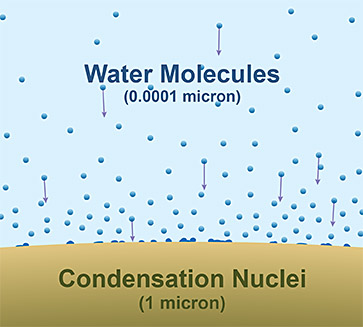
The relative size of water molecules to condensation nuclei.
In one form or another water is always present in the atmosphere. However, water molecules in the atmosphere are too small to bond together for the formation of cloud droplets. They need a "flatter" surface, an object with a radius of at least one micrometer (one millionth of a meter) on which they can form a bond. Those objects are called nuclei.
Nuclei are minute solid and liquid particles found in abundance. They consist of such things as smoke particles from fires or volcanoes, ocean spray or tiny specks of wind-blown soil. These nuclei are hygroscopic meaning they attract water molecules.
Called "cloud condensation nuclei", these water molecule attracting particles are about 1/100th the size of a cloud droplet upon which water condenses.
Therefore, every cloud droplet has a speck of dirt, dust or salt crystal at its core. But, even with a condensation nuclei, the cloud droplet is essentially made up of pure water.
Temperature's role
But having water attracting nuclei is not enough for a cloud to form as the air temperature needs to be below the saturation point. Called the dew point temperature, the point of saturation is where evaporation equals condensation.
Therefore, a cloud results when a block of air (called a parcel) containing water vapor has cooled below the point of saturation. Air can reach the point of saturation in a number of ways. The most common way is through lifting of air from the surface up into the atmosphere.
As a bubble of air, called a parcel, rises it moves into lower pressure since pressure decreases with height. The result is the parcel expands in size as it rises. This requires heat energy to be removed from the parcel. Called an adiabatic process, as air rises and expands it cools.
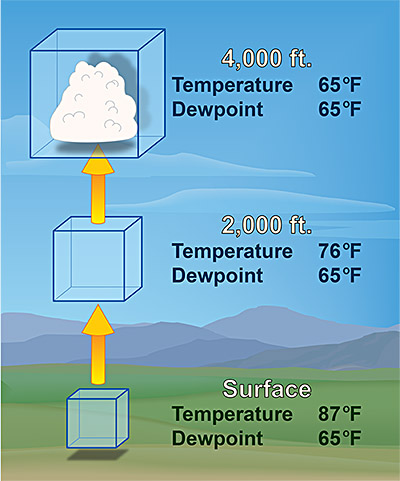
In an ideal atmosphere the saturation level of a parcel with a surface temperature of 85°F and a dew point of 65°F will cool to the saturation point at about 4,000 feet in elevation.
The rate at which the parcel cools with increasing elevation is called the "lapse rate". The lapse rate (the rate the temperature lapses or decreases) of unsaturated air (air with relative humidity <100%) is 5.5°F per 1000 feet (9.8°C per kilometer). Called the dry lapse rate, for each 1000 feet increase in elevation, the air temperature will decrease 5.5°F.
Once the parcel reaches saturation temperature (100% relative humidity) water vapor will condense onto the cloud condensation nuclei resulting in the formation of a cloud droplet.
But the atmosphere is in constant motion. As air rises drier air is added (entrained) into the rising parcel so both condensation and evaporation are continually occurring. So cloud droplets are constantly forming and dissipating.
Therefore, clouds form and grow when there is more condensation on nuclei than evaporation from nuclei. Conversely, they dissipate if there is more evaporation than condensation. Thus clouds appear and disappear as well as constantly change shape.
1.3 The Four Core Types of Clouds
While clouds appear in infinite shapes and sizes they fall into some basic forms. From his Essay of the Modifications of Clouds (1803) Luke Howard divided clouds into three categories; cirrus, cumulus and stratus.
Cirro-form

The Latin word 'cirro' means curl of hair. Composed of ice crystals, cirro-form clouds are whitish and hair-like. There are the high, wispy clouds to first appear in advance of a low pressure area such as a mid-latitude storm system or a tropical system such as a hurricane.
Cumulo-form
Generally detached clouds, they look like white fluffy cotton balls. They show vertical motion or thermal uplift of air taking place in the atmosphere. They are usually dense in appearance with sharp outlines. The base of cumulus clouds are generally flat and occurs at the altitude where the moisture in rising air condenses.
Strato-form

From the Latin word for 'layer' these clouds are usually broad and fairly wide spread appearing like a blanket. They result from non-convective rising air and tend to occur along and to the north of warm fronts. The edges of strato-form clouds are diffuse.
Nimbo-form
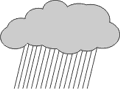
Howard also designated a special rainy cloud category which combined the three forms Cumulo + Cirro + Stratus. He called this cloud, 'Nimbus', the Latin word for rain. The vast majority of precipitation occurs from nimbo-form clouds and therefore these clouds have the greatest vertical height.
The Height of Clouds
The traditional division between the Polar and Temperate Regions is the Arctic Circle (66.5°N) in the Northern Hemisphere and the Antarctic Circle (66.5°S) in the Southern Hemisphere. The division between the Temperate and Tropical Regions are the Tropics of Cancer (23.5°N) in the Northern Hemisphere and the Tropics of Capricorn (23.5°S) in the Southern Hemisphere.
The actual division between these regions varies from day to day and season to season. Between the Polar and Temperate Regions lies the jet stream in both hemispheres, while the Sub-Tropical Jet Stream divides the Temperate and Tropical Regions.
One effect of these cores of strong wind is the maximum altitude of the tropopause decreases in each region as one moves from the equator to the poles. Generally, as the tropopause's height decreases, the elevations at which clouds occur also decreases.
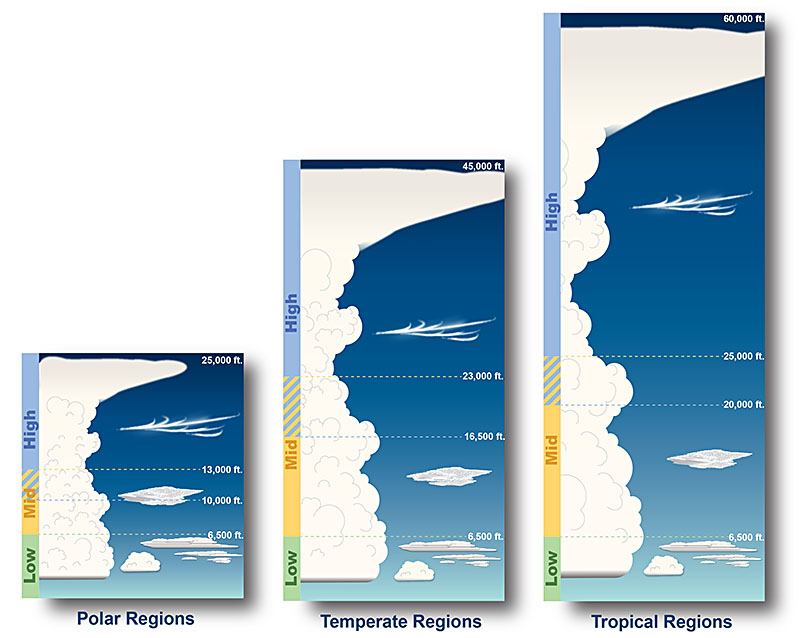
The exception is for low clouds which are officially said to have cloud bases within the first 6,500 feet (2,000 meters) of the surface in each region. But even that is not always the case.
The base of cumulus and cumulonimbus clouds can sometimes be higher than 6,500 feet (2,000 meters).
This happens when, despite the dry lower level of the atmosphere, the atmosphere in the mid-levels is fairly moist and unstable. The dryness of the lower level is such that parcels of air need to rise up to two miles (3 km), and sometimes more, before they cool to the point of condensation.

Since the jet stream follows the sun, it shifts toward the equator as winter progresses. Therefore, the polar region expands and the temperate region moves toward the equator. In summer, the Tropical Region expands shifting the temperate region toward the poles while the polar region shrinks.
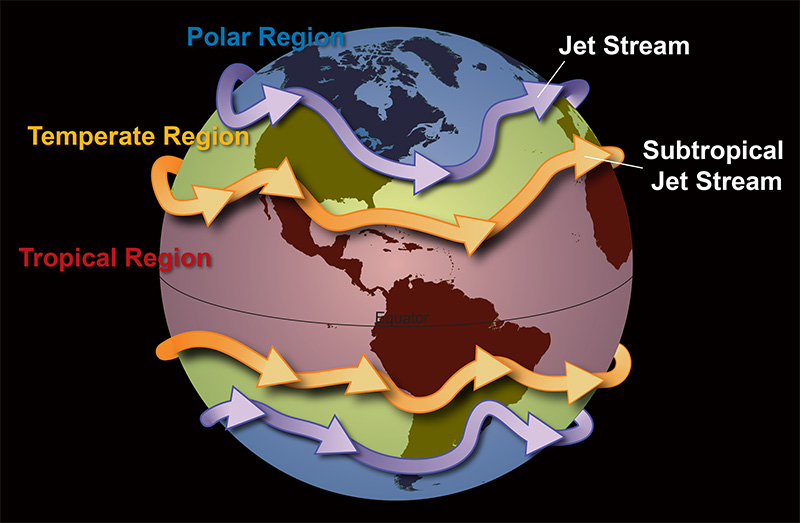
The division between these regions varies from day to day and season to season based upon locations of the jet and sub-tropical jet streams.
1.4 Ten Basic Clouds
Based on his observations, Luke Howard suggested there were modifications (or combinations) of the core four clouds between categories. He noticed that clouds often have features of two or more categories; cirrus + stratus, cumulus + stratus, etc. His research served as the starting point for the ten basic types of clouds we observe.
From the World Meteorological Organization's (WMO) International Cloud Atlas, the official worldwide standard for clouds, the following are definitions of the ten basic cloud types. Divided by their height the ten types of clouds are...
High Level Clouds
Cirrus (Ci), Cirrocumulus (Cc), and Cirrostratus (Cs) are high level clouds. They are typically thin and white in appearance, but can appear in a magnificent array of colors when the sun is low on the horizon.
Cirrus (Ci)
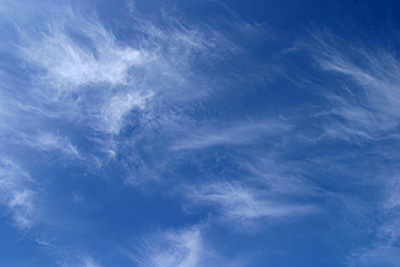
Detached clouds in the form of white, delicate filaments, mostly white patches or narrow bands. They may have a fibrous (hair-like) and/or silky sheen appearance.
Cirrus clouds are always composed of ice crystals, and their transparent character depends upon the degree of separation of the crystals. As a rule, when these clouds cross the sun's disk they hardly diminish its brightness. When they are exceptionally thick they may veil its light and obliterate its contour.
Before sunrise and after sunset, cirrus is often colored bright yellow or red. These clouds are lit up long before other clouds and fade out much later; some time after sunset they become gray.
At all hours of the day Cirrus near the horizon is often of a yellowish color; this is due to distance and to the great thickness of air traversed by the rays of light.
Cirrocumulus (Cc)
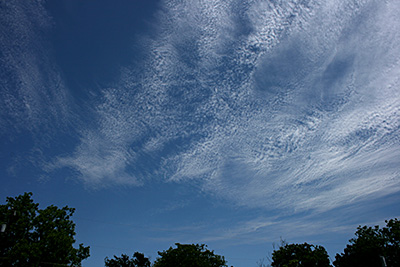
Thin, white patch, sheet, or layered of clouds without shading. They are composed of very small elements in the form of more or less regularly arranged grains or ripples.
Most of these elements have an apparent width of less than one degree (approximately width of the little finger - at arm's length).
In general, Cirrocumulus represents a degraded state of cirrus and cirrostratus, both of which may change into it and is an uncommon cloud. There will be a connection with cirrus or cirrostratus and will show some characteristics of ice crystal clouds.
Cirrostratus (Cs)
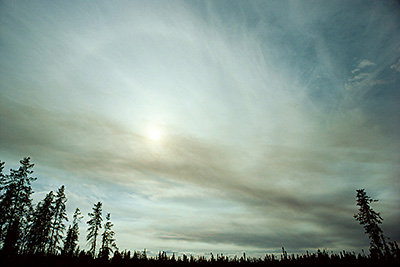
Transparent, whitish veil clouds with a fibrous (hair-like) or smooth appearance. A sheet of cirrostratus which is very extensive, nearly always ends by covering the whole sky.
During the day, when the sun is sufficiently high above the horizon, the sheet is never thick enough to prevent shadows of objects on the ground.
A milky veil of fog (or thin Stratus) is distinguished from a veil of Cirrostratus of a similar appearance by the halo phenomena which the sun or the moon nearly always produces in a layer of Cirrostratus.
Mid-Level Clouds
Altocumulus (Ac), Altostratus (As), and Nimbostratus (Ns) are mid-level clouds. They are composed primarily of water droplets, however, they can also be composed of ice crystals when temperatures are low enough.
In Latin, alto means 'high' yet Altostratus and Altocumulus clouds are classified as mid-level clouds. 'Alto' is used to distinguish these "high-level" clouds and their low-level liquid-based counterpart clouds; Stratus and Cumulus.
Altocumulus (Ac)
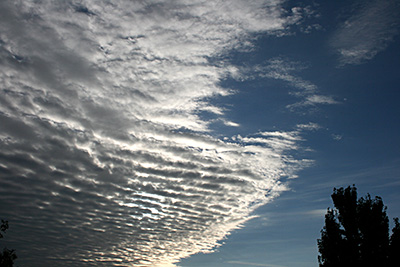
White and/or gray patch, sheet or layered clouds, generally composed of laminae (plates), rounded masses or rolls. They may be partly fibrous or diffuse and may or may not be merged.
Most of these regularly arranged small elements have an apparent width of one to five degrees (larger than the little finger and smaller than three fingers - at arm's length).
When the edge or a thin semitransparent patch of altocumulus passes in front of the sun or moon, a corona appears. This colored ring has red on the outside and blue inside and occurs within a few degrees of the sun or moon.
The most common mid cloud, more than one layer of Altocumulus often appears at different levels at the same time. Many times Altocumulus will appear with other cloud types.
Altostratus (As)
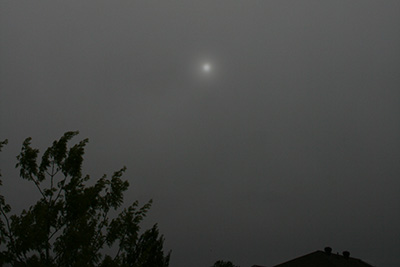
Gray or bluish cloud sheets or layers of striated or fibrous clouds that totally or partially covers the sky. They are thin enough to regularly reveal the sun as if seen through ground glass.
Altostratus clouds do not produce a halo phenomenon nor are the shadows of objects on the ground visible.
Sometime virga is seen hanging from Altostratus, and at times may even reach the ground causing very light precipitation.
Nimbostratus (Ns)
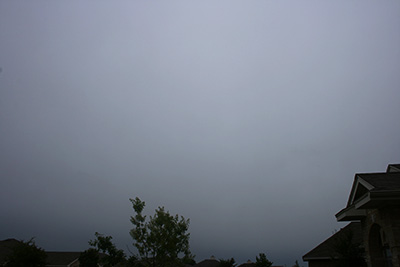
Resulting from thickening Altostratus, This is a dark gray cloud layer diffused by falling rain or snow. It is thick enough throughout to blot out the sun. Also, low, ragged clouds frequently occur beneath this cloud which sometimes merges with its base.
The cloud base lowers as precipitation continues. Because of the lowering base it is often erroneously called a low-level cloud. Both Altostratus and Nimbostratus can extend into the high level of clouds.
Low Level Clouds
Cumulus (Cu), Stratocumulus (Sc), Stratus (St), and Cumulonimbus (Cb) are low clouds composed of water droplets. Cumulonimbus, with its strong vertical updraft, extends well into the high level of clouds.
Cumulus (Cu)
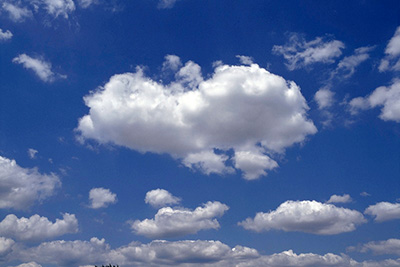
Detached, generally dense clouds and with sharp outlines that develop vertically in the form of rising mounds, domes or towers with bulging upper parts often resembling a cauliflower.
The sunlit parts of these clouds are mostly brilliant white while their bases are relatively dark and horizontal.
Over land cumulus develops on days of clear skies, and is due diurnal convection; it appears in the morning, grows, and then more or less dissolves again toward evening.
Cumulonimbus (Cb)
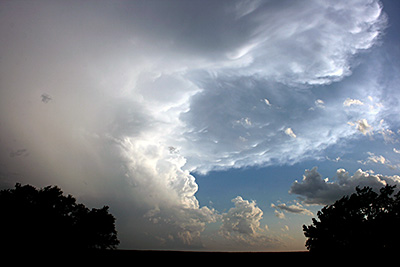
The thunderstorm cloud, this is a heavy and dense cloud in the form of a mountain or huge tower. The upper portion is usually smoothed, fibrous or striated and nearly always flattened in the shape of an anvil or vast plume.
Under the base of this cloud which is often very dark, there are often low ragged clouds that may or may not merge with the base. They produce precipitation, which sometimes is in the form of virga.
Cumulonimbus clouds also produce hail and tornadoes.
Stratocumulus (Sc)
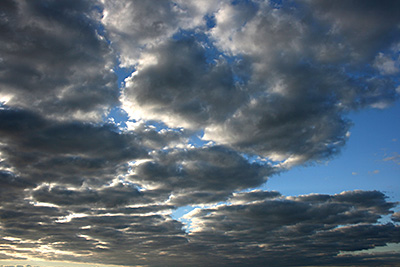
Gray or whitish patch, sheet, or layered clouds which almost always have dark tessellations (honeycomb appearance), rounded masses or rolls. Except for virga they are non-fibrous and may or may not be merged.
They also have regularly arranged small elements with an apparent width of more than five degrees (three fingers - at arm's length).
Stratus (St)
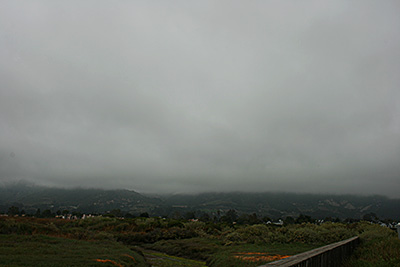
A generally gray cloud layer with a uniform base which may, if thick enough, produce drizzle, ice prisms, or snow grains. When the sun is visible through this cloud, its outline is clearly discernible.
Often when a layer of Stratus breaks up and dissipates blue sky is seen.
Sometimes appearing as ragged sheets Stratus clouds do not produce a halo phenomenon except, occasionally at very low temperatures.
1.5 The Color of Clouds
The color of a cloud depends primarily upon the color of the light it receives. The Earth's natural source of light is the sun which provides 'white' light. White light combines all of the colors in the 'visible spectrum', which is the range of colors we can see.
Each color in the visible spectrum represents electromagnetic waves of differing lengths. The colors change as the wavelength increases from violet to indigo to blue, green, yellow, orange, red and deep red.
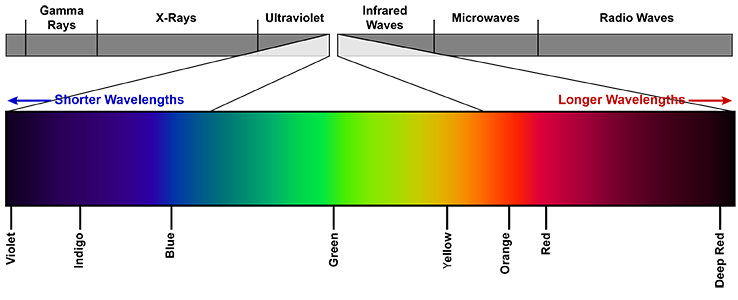
Visible light is only a small portion of the full electromagnetic spectrum.
As a light wave's length increases, its energy decreases. This means the light waves that make up violets, indigo and blue have higher energy levels than the yellow, orange and red.
One way to see the colors of sunlight is by the use of a prism. The velocity of light decreases slightly as it moves into the prism, causing it to bend slightly. This is called refraction. The degree of refraction varies with the energy level each wave.
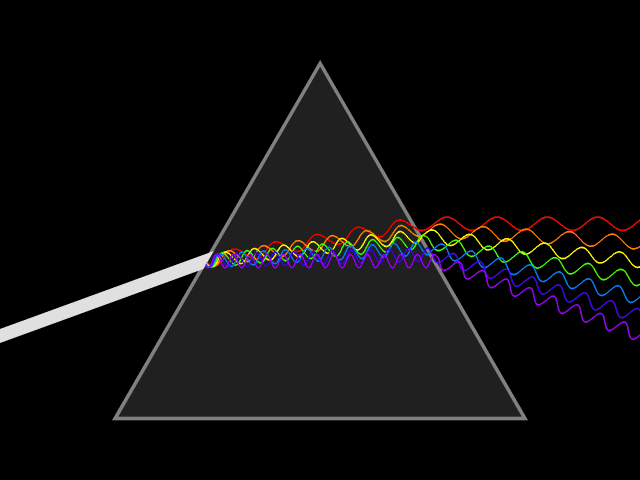
A prism will allow you to see the individual colors that comprise the source light. In this case, sunlight entering the prism is divided into the colors of a rainbow based upon the wavelength of each component.
The lowest energy light waves refract the least, while the highest energy waves exhibit the greatest refraction.
The end result is a dispersion of light into a rainbow of colors.
Rainbows are partly the result of sunlight refraction through a rain drop, which acts like a prism.
So, if sunlight is 'white', why is the sky blue?
The atoms and molecules comprising gasses in the atmosphere are much smaller than the wavelengths of light emitted by the sun.
As light waves enters the atmosphere, they begin to scatter in all directions by collisions with atoms and molecules. This is called Rayleigh scattering, named after Lord Rayleigh.
The color of the sky is a result of scattering of ALL wavelengths. Yet, this scattering is not in equal portion but heavily weighted toward the shorter wavelengths.
As sunlight enters the atmosphere much of the violet light waves scatter first but very high in the atmosphere and therefore not readily seen. Indigo color light waves scatter next and can be seen from high altitudes such as jet airplanes flying at normal cruising altitudes.
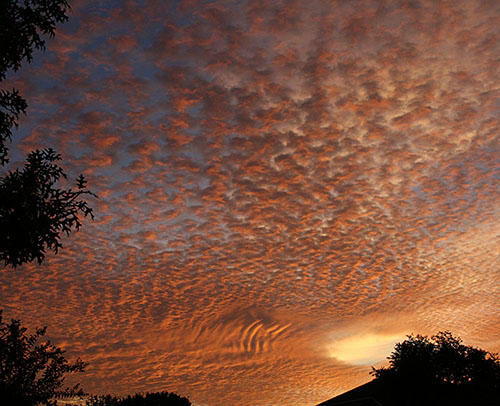
In this sunrise image, the blue sky, yellow Cirrus clouds and orange Altocumulus clouds result from both Rayleigh and Mie scattering. Rayleigh scattered produces blue sky and the color the clouds receives. Mei scattering is responsible for the color we see. Even with Rayleigh scattering taking place in the atmosphere, over one-half of the sun's 'white' light continues through the atmosphere reaching the earth's surface.
Next, blue light waves scatter at a rate about four times stronger than red light waves. The volume of scattering by the shorter blue light waves (with additional scattering by violet and indigo) dominate scattering by the remaining color wavelengths. Therefore, we perceive the blue color of the sky.
If the sky is blue, why are clouds white?
Unlike Rayleigh scattering, where the light waves are much smaller than the gases in the atmosphere, the individual water droplets that make up a cloud are of similar size to the wavelength of sunlight. When the droplets and light waves are of similar size, then a different scattering, called 'Mie' scattering, occurs.
Mie scattering does not differentiate individual wave length colors and therefore scatters ALL wave length colors the same. The result is equally scattered 'white' light from the sun and therefore we see white clouds.
Yet, clouds do not always appear white because haze and dust in the atmosphere can cause them to appear yellow, orange or red. And as clouds thicken, sunlight passing through the cloud will diminish or be blocked, giving the cloud a grey color. If there is no direct sunlight striking the cloud, it may reflect the color of the sky and appear bluish.
Rayleigh and Mie
Some of the most picturesque clouds occur close to sunrise and sunset when they can appear in brilliant yellows, oranges and reds. The colors result from a combination of Rayleigh and Mie scattering.
As light passes through the atmosphere, most of the shorter blue wavelengths are scattered leaving the majority of longer waves to continue. Therefore the predominate color of sunlight changes to these longer wavelengths.
Also, as light enters the atmosphere, it refracts with the greatest bend in its path near the earth's surface where the atmosphere is most dense. This causes the light's path through the atmosphere to lengthen, further allowing for more Rayleigh scattering.
As light continues to move though the atmosphere, yellow wavelengths are scattered leaving orange wavelengths. Further scattering of orange wavelengths leaves red as the predominate color of sunlight.
Therefore, near sunrise and sunset, a cloud's color is what sunlight color it receives after Rayleigh scattering. We see that sunlight's color due to Mei scattering which scatters all remaining wavelength colors equally.
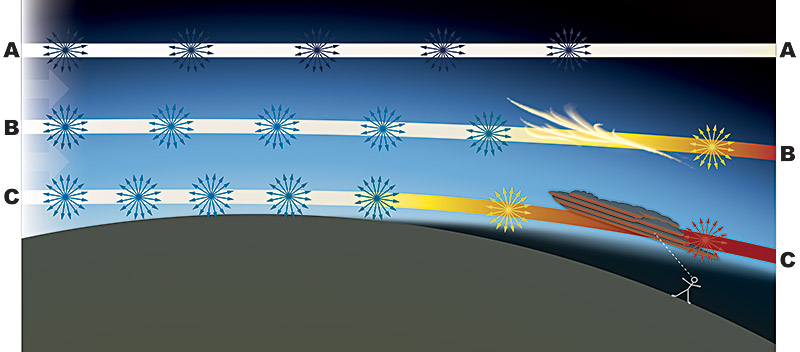
A depiction of three hypothetical waves of light passing through the earth's atmosphere. A) Sunlight barely enters the atmosphere. Therefore only the violet and indigo colors are scattered. B) After violet and indigo colors are scattered first the sunlight penetrates further into the atmosphere where the greatest portion of blue scattering occurs. There is some bending of light by the atmosphere due to refraction adding some length to the light's path. Just as the light path begins to leave the atmosphere the color is predominantly yellow. C) Greatest refraction and longest light path with the most Rayleigh scattering.
The Color of Perception
Sometimes, under direct sunlight, clouds will appear gray or dark gray against a blue sky or larger backdrop of white clouds. There are usually two reasons for this effect.
1) The clouds may be semi-transparent which allows the background blue sky to be seen through the cloud. Thereby giving it a darker appearance.
2) A more common reason is the contrast between the background (blue sky or additional clouds) and foreground cloud overwhelms our vision. In essence, our eyes are tricked with our perception of foreground clouds appearing dark relative to the overwhelming brightness of the background.
This latter reason is why sunspots look dark. Brightness of the sun is based upon temperature and a sunspot's temperature is lower than the surrounding surface of the sun.
Relative to the surface of the sun, sunspots appear quite dark. However, if sunspots were isolated from the surrounding brightness, they would still be too bright to look at with the unprotected eye. The contrast in brightness between the two is what causes sunspots appear dark.
1.6 Predicting the Weather with Clouds
Being able to predict the weather by observing cloud formations is a skill that is somewhat lost on us modern humans. Most of us can easily look at a cloud and see the unicorn or ice cream cones, but very few of us can look at clouds and see the approaching cold front.
Fortunately, being able to predict the weather is easier than one may think. Follows is some helpful information to get you started.
Step 1: Categorization
Clouds can easily be broken into four categories. These categories are high clouds, middle clouds, low clouds and clouds with vertical growth.
Clouds are also identified by shape. Cumulus refers to a "heap" of clouds. Stratus refers to clouds that are long and streaky. And nimbus refers to the shape of "rain" because we all know what rain looks like.
Step 2: High Clouds
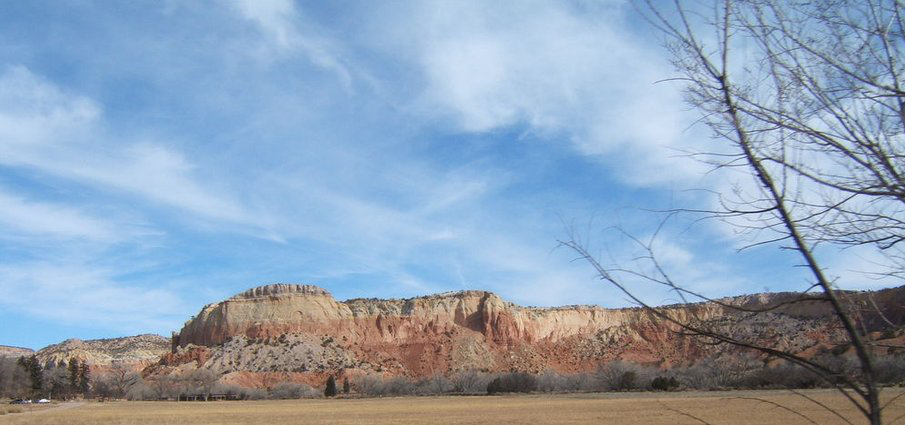
High clouds form at 16,000 - 43,000 feet. Basically, these are the clouds that you only encounter on the top of really high mountains or at the cruising altitude of a jet airplane. Due to the extreme conditions at which they form, they tend to be comprised primarily of ice crystals.
High clouds do not block sunlight.
High clouds include:
Cirrus
Cirrostratus
Cirrocumulus
Step 3: Cirrus
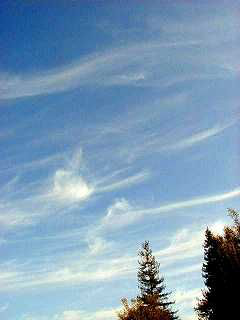
Cirrus clouds are white wispy clouds that stretch across the sky. By all accounts, cirrus clouds indicate fair weather in the immediate future. However, they can also be an indication of a change in weather patterns within the next 24 hours (most likely a change of pressure fronts).
By watching their movement and the direction in which the streaks are pointed, you can get a sense of which direction the weather front is moving.
Step 4: Cirrostratus
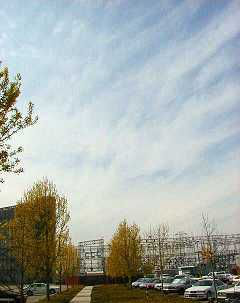
Cirrostratus tend to be sheet-like and cover the whole sky. You can usually tend to see the sun or moon through them. Their presence usually indicates moist weather within the next 12 - 24 hours.
Step 5: Cirrocumulus
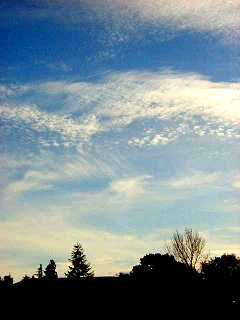
Cirrocumulus clouds tend to be large groupings of white streaks that are sometimes seemingly neatly aligned. In most climates these mean fair weather for the near future.
However, in the tropics, these clouds may indicate an approaching tropical storm or hurricane (depending on the season).
Step 6: Middle Clouds
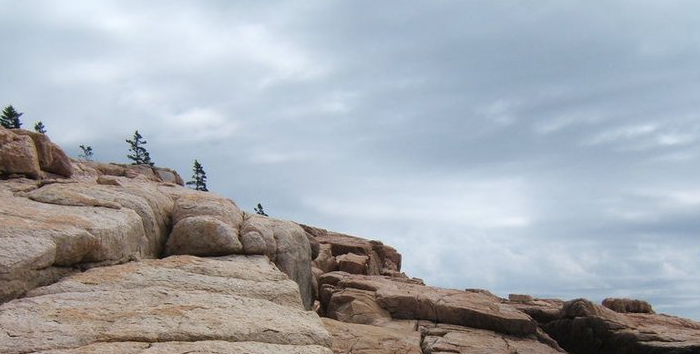
Middle clouds form at 6,500 to 23,000 feet. They are comprised of water, and, if cold enough, ice.
Middle clouds often block sunlight, but not always.
Middle clouds consist of:
Altostratus
Altocumulus
Nimbostratus
Step 7: Altostratus
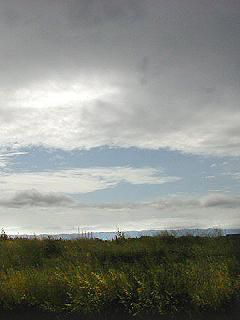
Altostratus are grey and/or blue clouds that cover the whole sky. They tend to indicate a storm some time in the very near future since they usually precede inclimate weather.
Step 8: Altocumulus
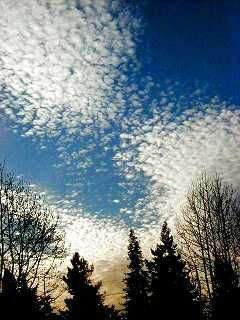
Altocumulus are grayish-white clouds blanketing the entire sky. They tend to look like large fluffy sheets in which there is a lot of contrast between light and dark. Sun does not pass through them. If you see them in the morning, prepare for a thunderstorm in the afternoon.
Step 9: Nimbostratus
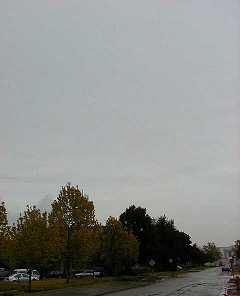
Nimbostratus is your standard rain cloud. It is a large flat sheet of grey cloud with a little bit of differentiation. If you see these, chances are it's raining outside.
Step 10: Low Clouds
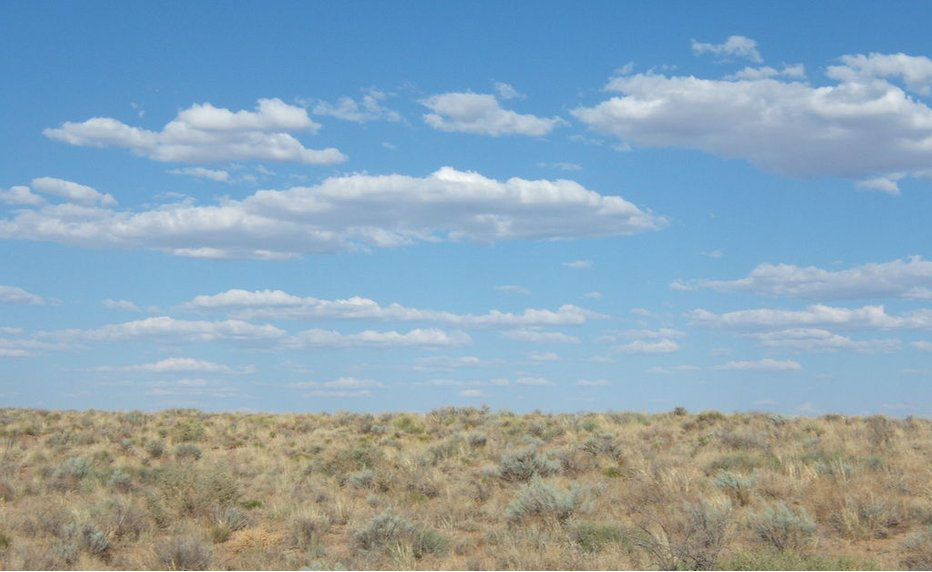
Low clouds form below 6,500 feet. These clouds are the ones that like to hang-around just above tall buildings. These clouds tend to contain water, but can also be comprised of snow if the weather gets cold enough.
Low clouds block sunlight and can bring precipitation and wind.
Low clouds include:
Stratus
Stratocumulus
Step 11: Stratus
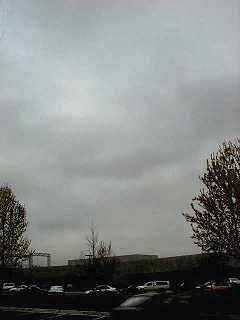
Stratus are low-lying solid clouds that are often formed when fog lifts off the ground. They obviously look like an elevated fog. Often they bring drizzle or light snow.
Step 12: Stratocumulus
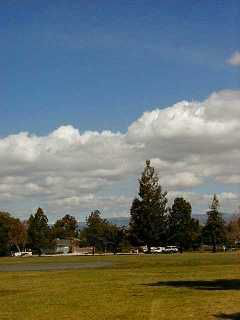
Stratocumulus are low-lying bumpy and grey clouds. They do not bring precipitation. They also do not cover the entire sky and tend to come in rows and patches.
Step 13: Clouds with Vertical Mobility
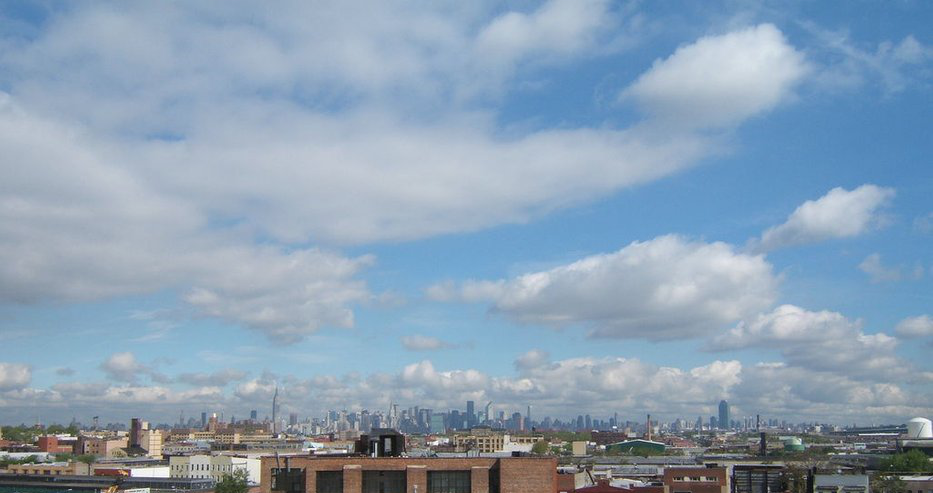
And last, but not least, are clouds with vertical growth which tend to have a base that hangs really low (5,000 feet) and a top that climbs really high (over 50,000 feet).
Clouds in this category include:
Cumulus
Cumulonimbus
Step 14: Cumulus
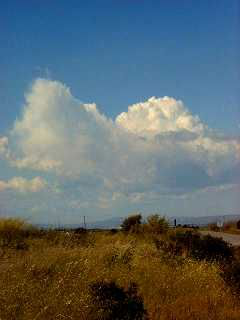
Cumulus clouds are your stereotypical white "cotton ball" clouds. So long as the clouds remain low clumps floating across the sky, there will be fair weather. However, you need to keep an eye on these clouds because any vertical growth can indicate the start of a large storm.
Step 15: Cumulonimbus
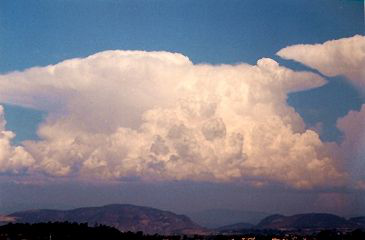
Cumulonimbus are cumulus clouds that have grown vertically into an anvil-like shape. The anvil tends to point in the direction the storm is moving. These clouds bring most dangerous weather such as rain, lightning, hail and tornadoes.
Step 16: That's a Lot of Information. Now What?
Alright, now that we know what the basic types of clouds are, we need to look up at the sky.
Go outside and look at the sky. If there are no clouds in the sky, then the weather is fine.
Assuming there are clouds in the sky, we now need to identify them.
First, determine if you can see the sun or moon through them. If you can, then you are looking at high altitude clouds. If the clouds are thick, then there is a chance of poor weather a day or two in the future. To determine when the storm will arrive, observe whether or not the clouds appear to be moving. If they appear stationary, it is a slow moving front and probably won't arrive for over a day. If they appear to be moving, then the change in weather will be there faster. You can tell which way the storm is traveling by the direction the clouds are pointing.
If you cannot see through the clouds, chances are that you are looking at middle or low altitude clouds. First, determine which of the two you are dealing with by observing shape, color and other more obvious giveaways. Are they covering the entire sky? Then they may be middle altitude clouds. Do they appear to be grey with a blue tint or fluffy white/grey clouds with a lot of contrast between light and dark? If yes, then these are middle altitude clouds and you should prepare for rain within half a day.
If you answered no to any of those questions, then check for low-altitude clouds. These tend to appear low and often engulf mountains and buildings. If it looks like an elevated fog, expect drizzle (if it isn't already). If it is rows of low, dark, lumpy clouds, then the weather is otherwise okay, but watch for further developments. If there is a low, dark, grey sheet, then it's probably raining. If it's not, quickly go get your umbrella.
If your clouds are low, fluffy, and white like cotton balls in the sky, then the weather is okay. However, keep an eye on these for any vertical growth of the cloud upwards into the sky (turning into anvil shapes). These clouds can unexpectedly change from fair weather indicators into violent thunderstorms.
2. Precipitation
2.1 Liquid precipitation - Rain
Rain is one type of liquid precipitation and is the result of water vapour condensing and precipitating.
This type of liquid precipitation can be described and seen as drops of liquid water falling from the sky.
To become rain, the water condensed in the clouds must be heavy enough to fall to Earth. For this to occur, the tiny droplets need to grow into drops by acquiring more water and becoming larger.
Some droplets collide with others in order to become larger whilst others will grow as water condenses out the air into the droplet. When these drops become too heavy to stay in the cloud, we get rain.
The size of raindrops is highly variable, from as small as 0.5mm in diameter to 6mm.
Rain is classified according to how it is generated such as by an approaching front, by convective cloud or by a cyclone.
There are three main types of rainfall:
Frontal rain
Frontal rain occurs when two air masses meet. When a warm air mass meets a cold air mass, they don't mix as they have different densities. Instead, the warm less dense air is pushed up over the cold dense air creating the 'front'.
As a result, the warm less dense air cools, and the water vapour condenses into water and falls as raindrops.
Orographic rain
Orographic rain is produced as a result of clouds formed from the topography - or shape - of the land. Where there is high ground moist air is forced upwards producing cloud and potentially, precipitation.
Convective rain
Convective rain is produced by convective cloud. Convective cloud is formed in vertical motions that result from instability of the atmosphere. One way that the atmosphere can become unstable is by heating from the sun. The ground warms up, causing moisture in the ground to evaporate and rise, and the hot ground also heats the air above it. As the water vapour rises, it cools and condenses into clouds and eventually rain.
When you heat the air from below like this, much like in a boiling kettle, you tend to get "bubbles" of rising air, known as updraughts. These are much smaller than the large-scale lifting of air that occurs at fronts and over mountain ranges. This tends to give us smaller areas of rain, with clear spells in between, commonly referred to as "sunshine and showers".
Sometimes, you can get all three types of rain at once, and this can lead to severe flooding.
2.2 Solid precipitation - Snow
Snowflakes are an aggregation of ice crystals formed from vapour condensing within clouds at a temperature below 0°C. Contrary to what you might think, water vapour and low temperatures are not the only conditions needed to form ice crystals. Dust particles are crucial for this process, as water vapour molecules form around them aggregating to create crystals. A newly-formed ice crystal arranges into a column-shaped hexagonal structure. Then, aggregating with other water molecules, it changes an infinite number of times gaining an incredible array of different natural shapes. In some cases, ice crystal are higher rather than larger and create needle shapes. Other crystals are larger and create wide hexagonal plates. Arms sprout from the six corners of the initial hexagonal prism and further branches develop on them creating spectacular shapes (dendritic growth).
Each ice crystal has a unique story: from its origin to the moment it falls to the ground, it passes through different atmospheric areas which vary in terms of temperature and humidity, the main factors influencing ice crystal shaping. Moreover, every ice crystal is formed by billions of water molecules aggregating unpredictably. For this reason, it’s impossible for two ice crystals to be alike!
Snowflakes: the air-cleaners
Many scientists have focused their research on ice crystals and snowflake formation. One of the first to study this phenomenon was Descartes who published a treaty on their morphology. To this day the formation mechanisms of ice crystal aren’t completely known. Scientists haven’t found out yet why water vapour aggregates to existing crystals favouring either the prism walls, bases or corners according to temperature and humidity. Scientists’ main goal is understanding why snow is the best “air-cleaner”. Among all pollutant substances depositing on the ground, as much as 90% are incorporated in ice crystals and snowflakes. These substances are snow aggregation nuclei: particles are incorporated in the ice crystals during formation and deposited on the ground when snow falls. Some scientists believe that understanding the mechanisms of their formation could be useful to create more effective anti-pollution filters.
2.3 Solid precipitation - Hail
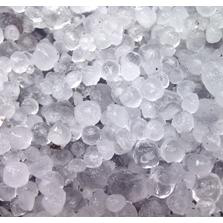
Hail is solid precipitation in the form of balls or pieces of ice known as hailstones.
Hailstones fall from cumulonimbus clouds and are commonly spherical or conical in shape. Their diameter can range from 5 to 50mm or even more, however, most hailstones are smaller than 25mm.
In thunderclouds, drops of water are continuously taken up and down though the cloud. When they go to the top of the cloud, it is very cold and they freeze. As the updraughts in thunderclouds are very big, they can keep these hailstones for a long time, so they get larger and larger by becoming coated with more and more ice.
When they get really big, the updraughts in the cloud cannot hold them up anymore and they fall to earth, and by this time they are big balls of ice, and don't have time to melt before they reach the ground. Hail can only be formed in this way, unlike snow which can be formed in fronts, and orographically too, just like rain.
2.4 PRECIPITATION INTENSITY
In weather observations you will notice that for the precipitation type there can be adjectives for the intensity. Two intensity descriptions are light and heavy. If the intensity is moderate then no adjective will be given. Below are precipitation rates from drizzle, rain, snow and ice pellets by intensity. Note that snow and drizzle rates are based on visibility and not on precipitation accumulation. Ice pellets can use either a precipitation rate or visibility reduction.
Light Drizzle: Drizzle in which the visibility from the drizzle is still greater than 0.5 mile
Drizzle: Drizzle in which the visibility from the drizzle is in a range from 0.25 and 0.5 mile
Heavy Drizzle: Drizzle in which the visibility from the drizzle is less than 0.25 mile
Light Rain: A rain rate of 0.10 inches per hour or less
Rain: A rain rate of 0.11 to 0.30 inches per hour
Heavy Rain: A rain rate of 0.31 inches per hour or greater
Light Snow: Snow in which the visibility from the snow is still greater than 0.5 mile
Snow: Snow in which the visibility from the snow is in a range from 0.25 and 0.5 mile
Heavy Snow: Snow in which the visibility from the snow is less than 0.25 mile
Light Ice Pellets: An accumulation of 0.10 inches per hour or less; OR not much of a restriction in visibility due to the ice pellets
Ice Pellets: An accumulation of 0.11 to 0.30 inches per hour; OR visibility less than 7 miles due to the ice pellets
Heavy Ice Pellets: An accumulation of 0.31 inches per hour or greater; OR visibility less than 3 miles due to the ice pellets
What is a "Trace" of Precipitation?
In meteorology, the word "trace" is used to describe a very small amount of precipitation that results in no measurable accumulation. In other words, a 'trace' is when you can observe that some amount of rain or snow fell, but it was not enough to be measured using a rain gauge, snow stick, or any other weather instrument.
Since trace precipitation falls as very light and brief sprinkles or flurries, you often won't know it unless you happen to be outdoors and see or feel it falling.
Trace amounts of precipitation are abbreviated by the capital letter "T", often placed in parenthesis (T).
If you must convert a trace to a numerical amount, it would equal 0.00.
Rain Sprinkles and Drizzle
When it comes to liquid precipitation (rainfall), meteorologists don't measure anything under 0.01 inch (one hundredth of an inch). Since a trace is anything less than can be measured, anything less than 0.01 inch of rain is reported as a trace of rain.
Sprinkles and drizzle are the most frequent types of rain that result in immeasurable amounts. If you've ever seen a few random raindrops dampen the pavement, your car windshield, or felt one or two dampen your skin, but a rain shower never materializes -- these, too, would be considered trace rainfall.
Snow Flurries, Light Snow Showers
Frozen precipitation (including snow, sleet, and freezing rain) has a lower water content than rain. That means that it takes more snow or ice to equal the same amount of liquid water that falls as rain. This is why frozen precipitation is measured to the nearest 0.1 inch (one tenth of an inch). A trace of snowfall or ice, then, is anything less than this.
A trace of snow is commonly called a dusting.
Snow flurries are the most common cause of trace precipitation in winter. If flurries or light snow showers fall and it doesn't accumulate, but continuously melts as it reaches the ground, this would also be considered trace snowfall.
Does Moisture From Dew or Frost Count as a Trace?
Although fog, dew, and frost also leave behind light moisture, surprisingly none of these are considered examples of trace precipitation. Since each result from the process of condensation, none are technically precipitation (liquid or frozen particles that fall to the ground).
Does a Trace Ever Add up to a Measurable Amount?
It's logical to think that if you add up enough tiny amounts of water you will eventually end up with a measurable amount. This is not so with precipitation. No matter how many traces you add together, the sum will never be more than a trace.

